Azar Consultation for US market
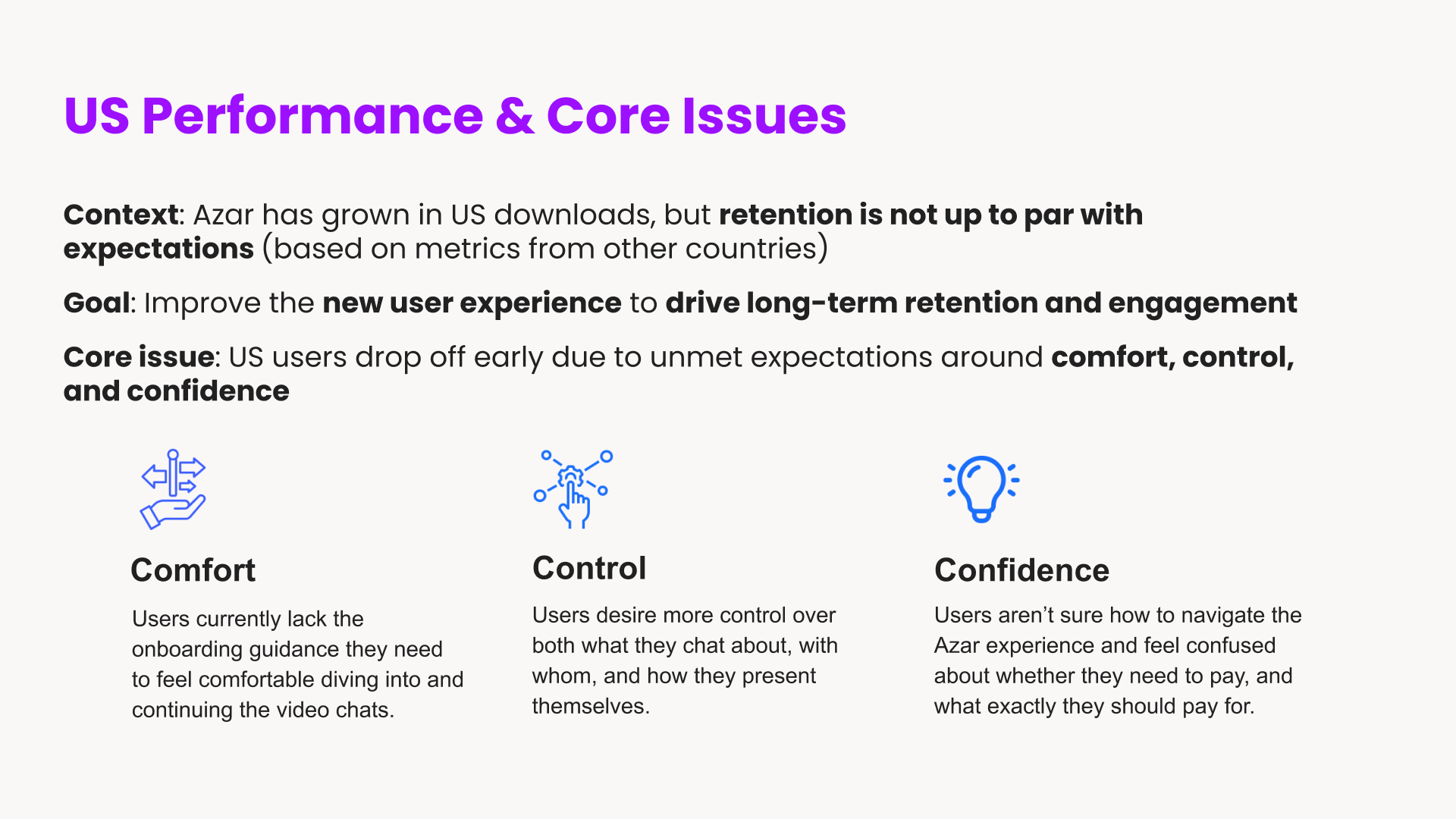
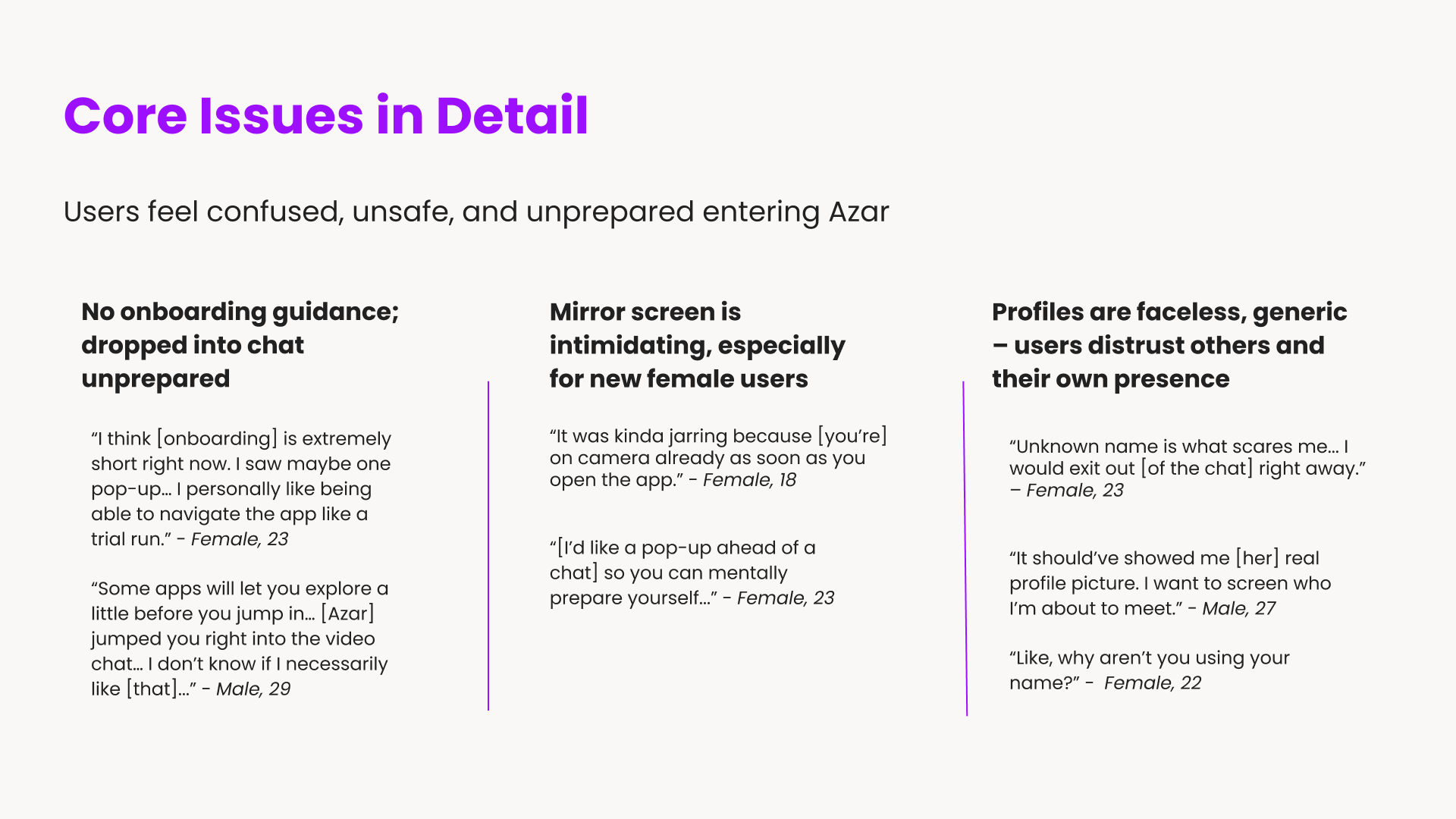
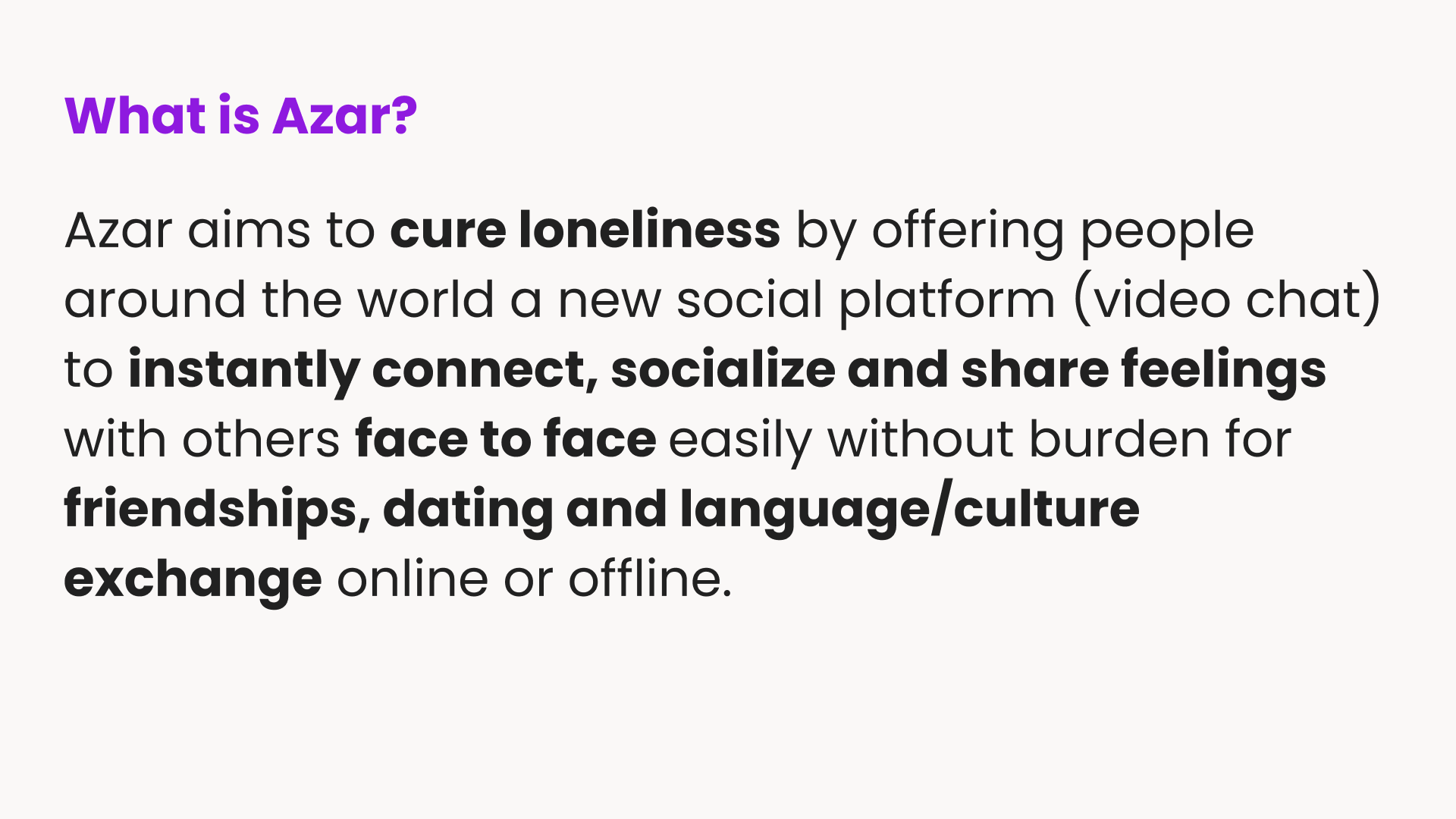
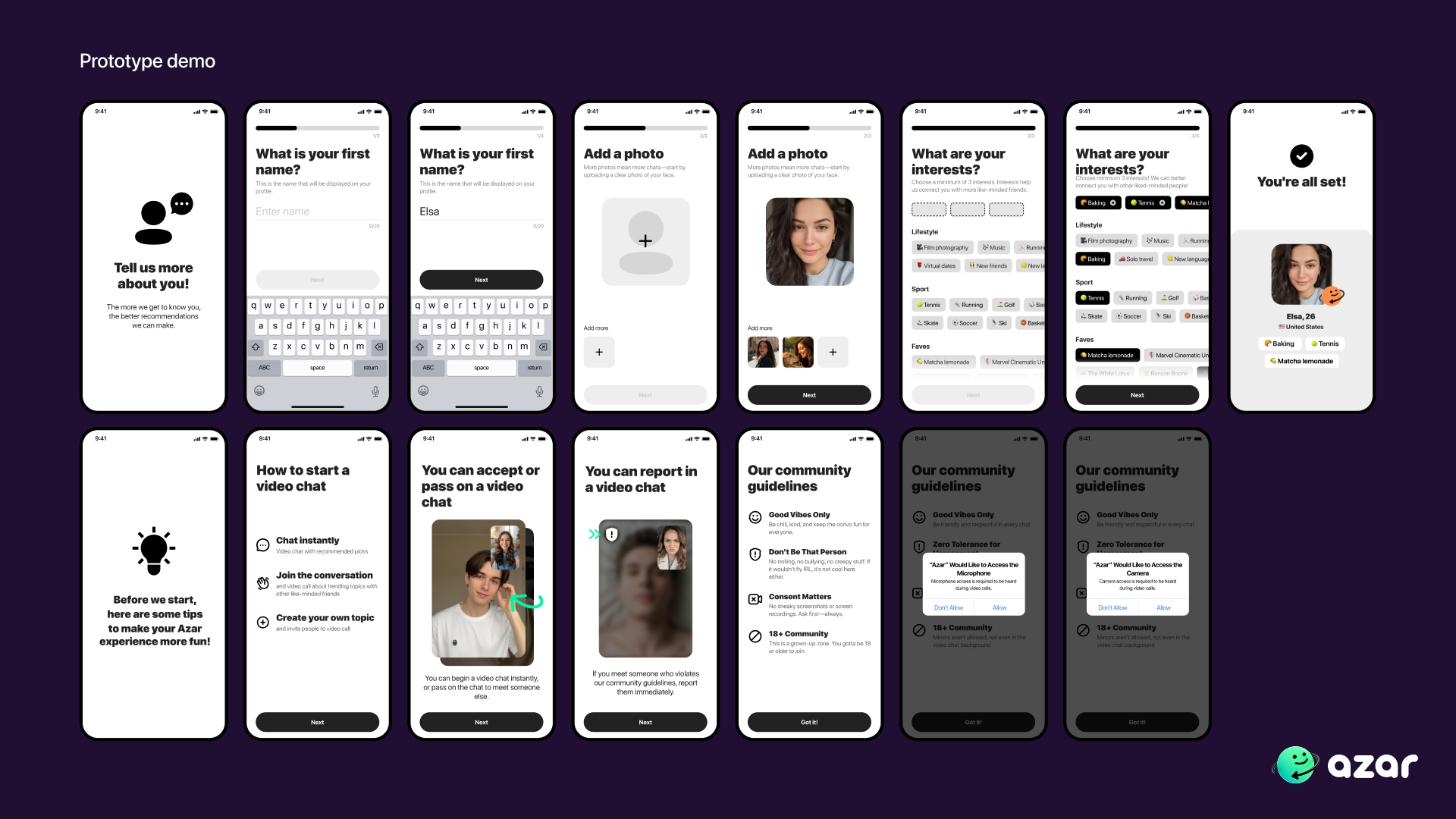
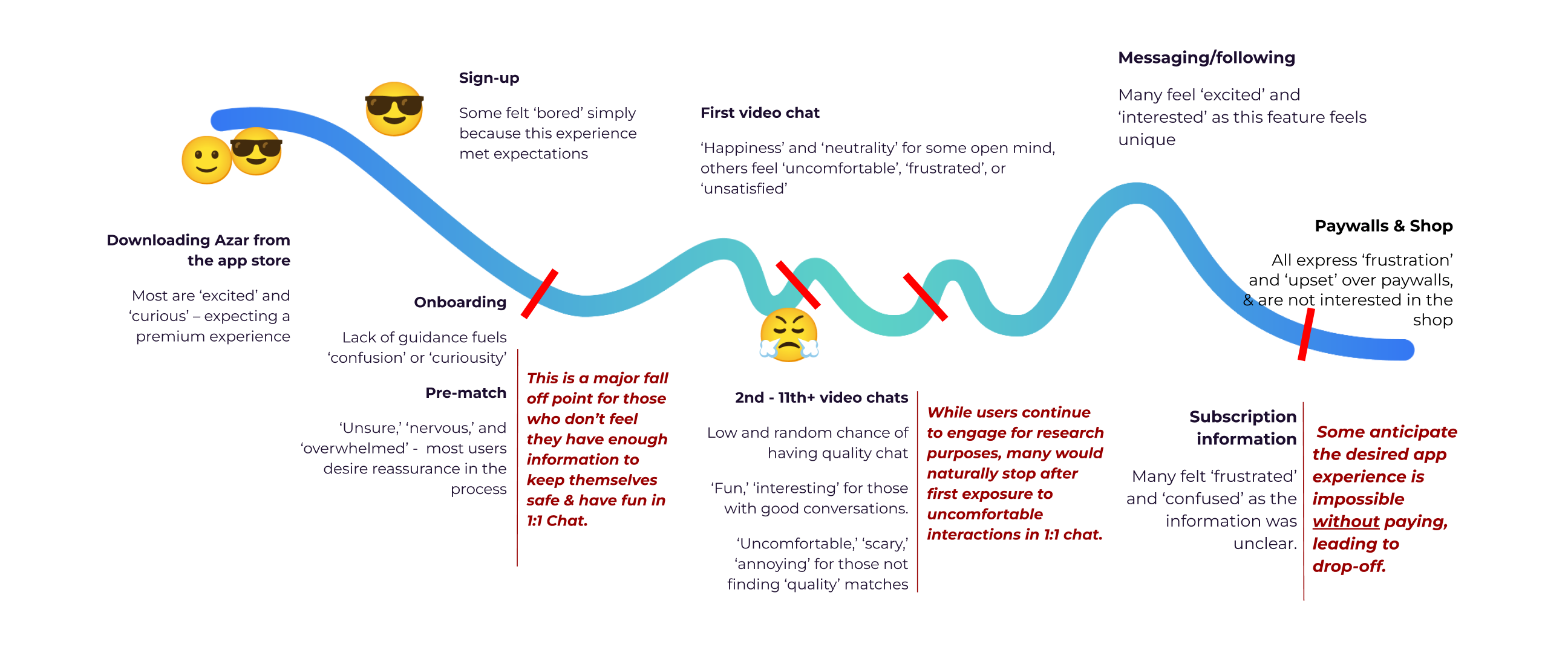
This engagement focused on supporting Azar's re-entry into the U.S. market, where previous efforts had seen limited adoption. As the team prepared for a major redesign and updated marketing strategy, the objective was to better understand American user expectations by gathering direct consumer feedback on both the live product and a revamped prototype. Through user observation and evaluation, it became clear that sentiment among U.S. participants was mixed, with key barriers to adoption including an unclear purpose of the chat experience and friction introduced by the paywall. US users drop off early due to unmet expectations around user comfort, control, and confidence—the "3 Cs"—emerged as critical gaps affecting retention.
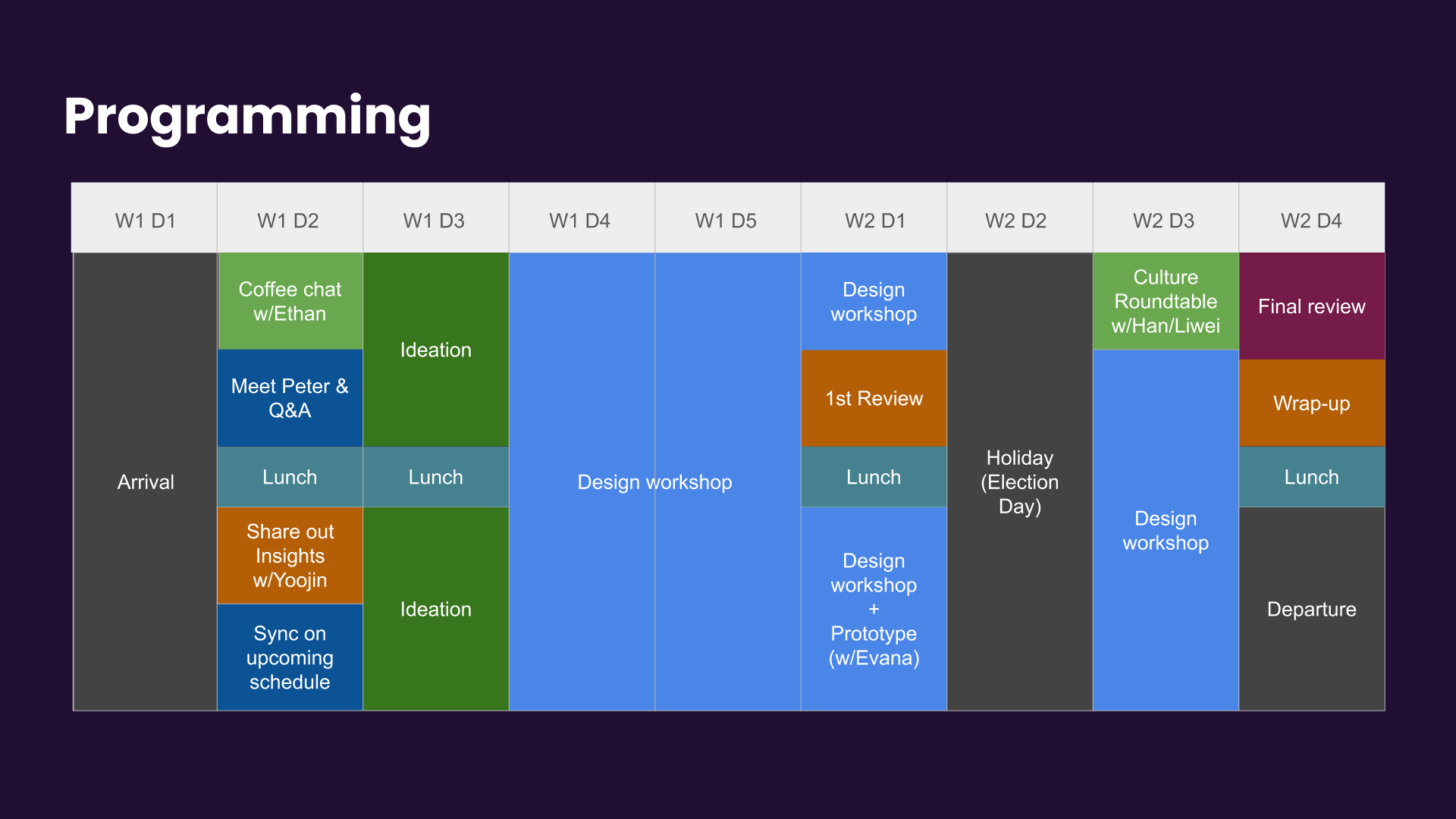
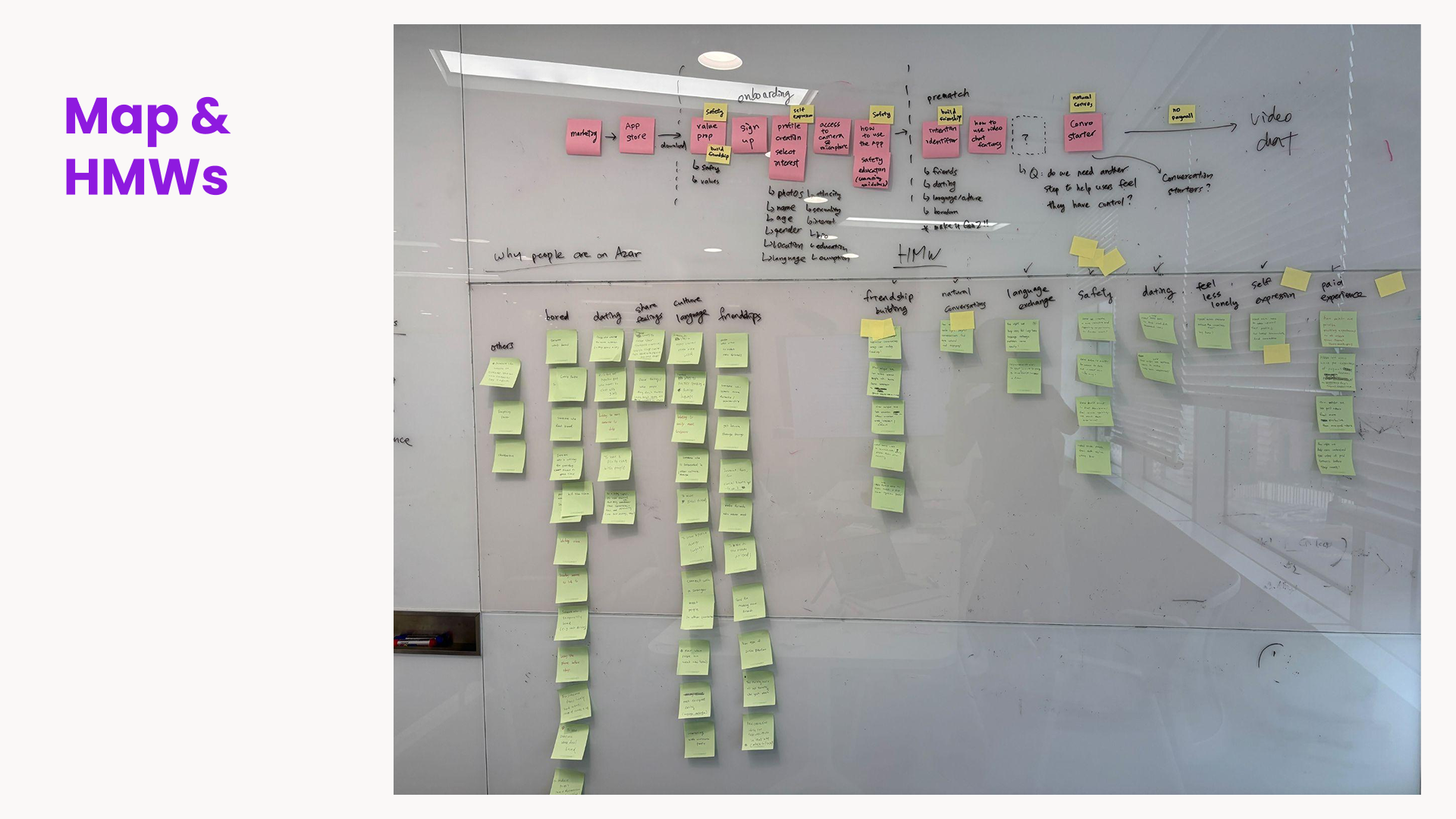
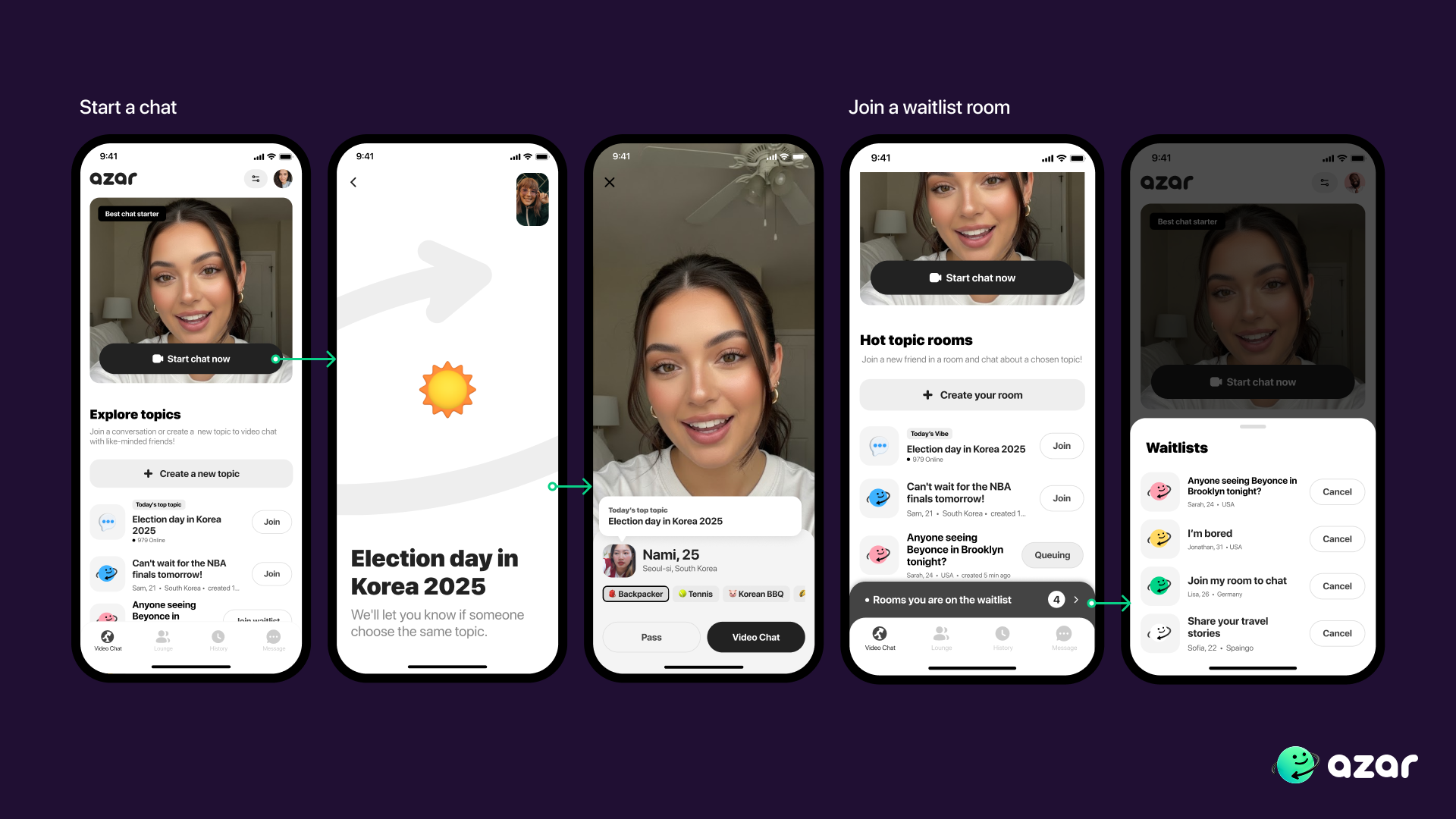
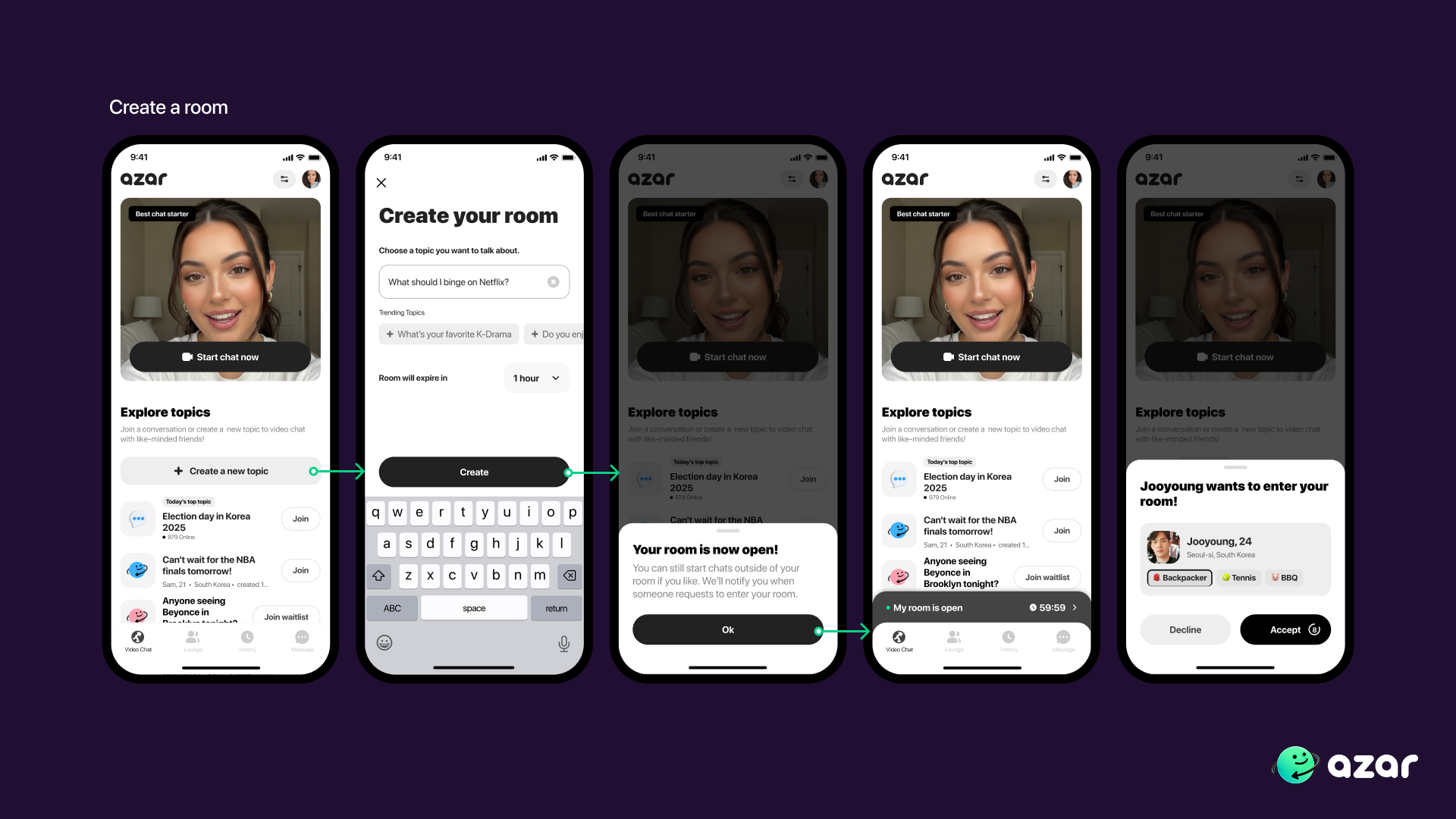
Over the course of two weeks in Korea, the focus was on guiding the team through a more structured and effective design process, while also assessing the current capabilities of the design organization. This included hands-on collaboration and facilitating design workshops to align on problem framing and solutioning. A key outcome of the engagement was the development of an MVP prototype that demonstrated a clear first step toward improving the user experience, grounded in user insights and tailored to better meet the expectations of the U.S. audience.
Approach
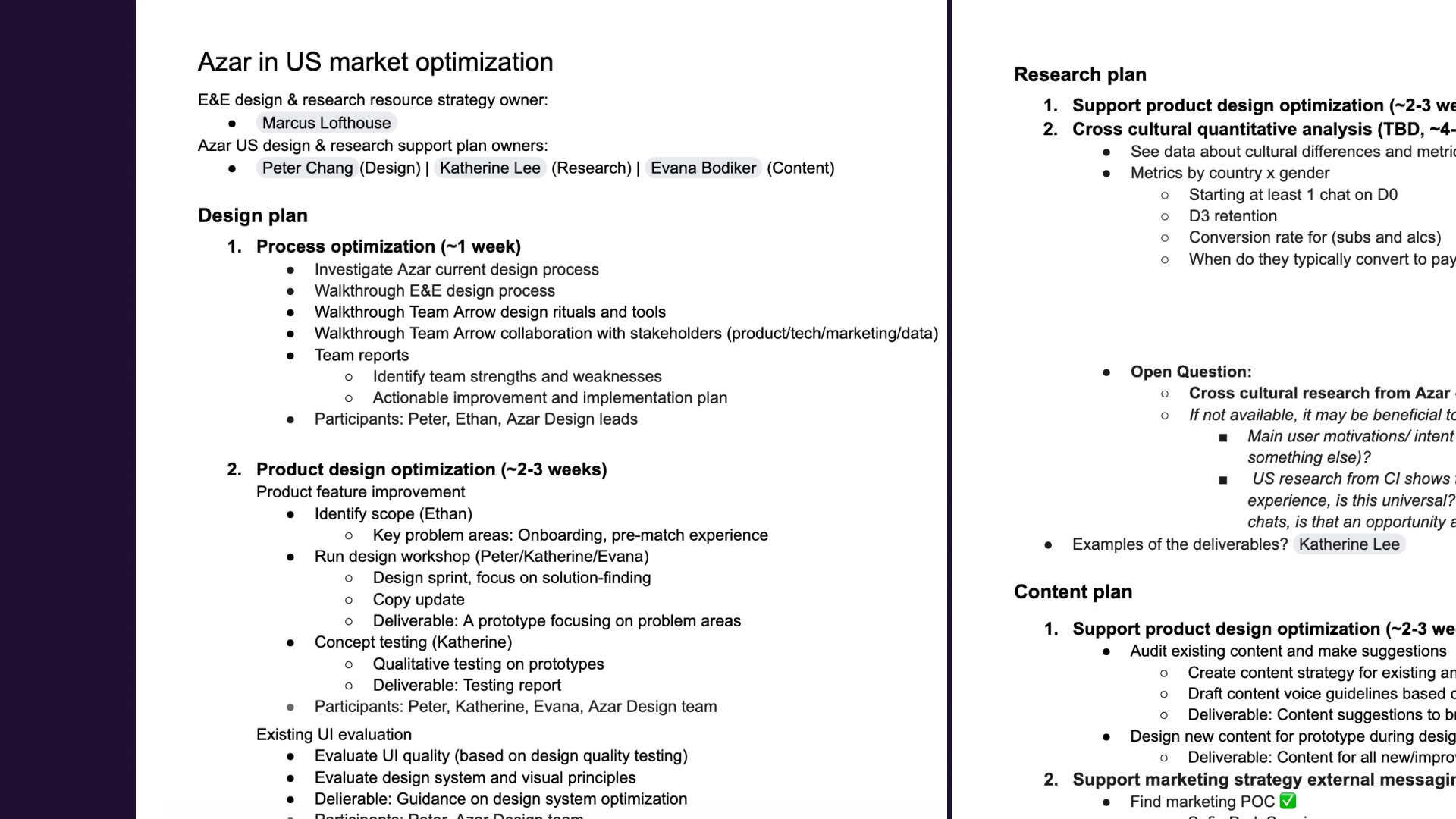
The engagement was structured around three key workstreams: design process optimization, product design improvement, and supporting research and content strategy.
In the first phase, the focus was on evaluating Azar's current design operations by reviewing existing processes, team rituals, tools, and cross-functional collaboration with product, engineering, marketing, and data. This assessment helped identify team strengths and gaps, resulting in a set of actionable recommendations to improve efficiency and alignment.
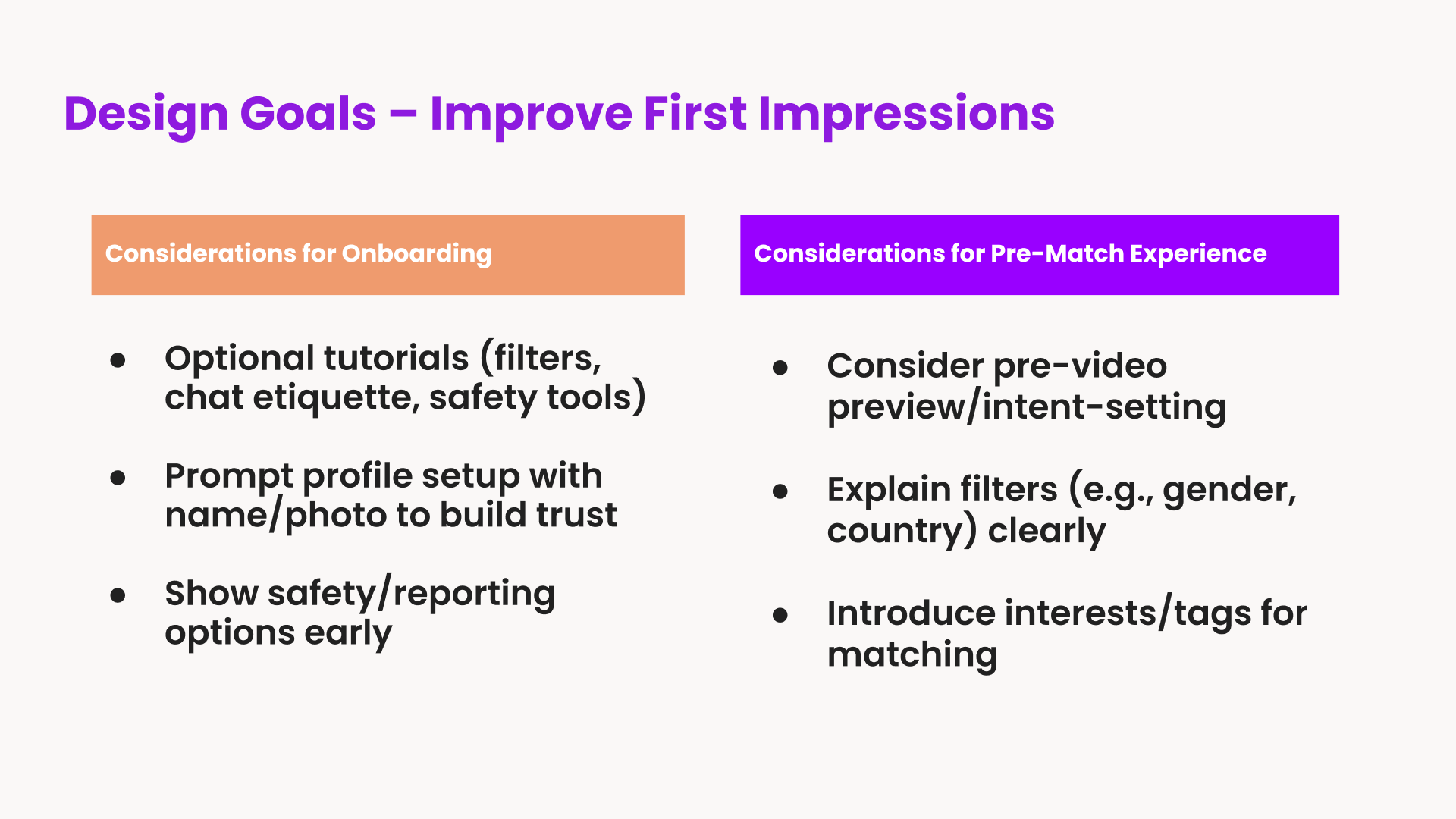
The second phase centered on product design optimization, with a focus on high-impact areas such as onboarding and the pre-match experience. Through collaborative design workshops and a sprint-based approach, the team explored solutions, refined content, and developed an MVP prototype. This was complemented by qualitative concept testing to validate design directions, as well as an evaluation of the existing UI, design system, and visual principles to provide guidance on improving overall design quality.
Supporting these efforts, a research and content plan was developed to inform decision-making. This included defining key metrics for cross-cultural analysis, identifying user behavior patterns, and exploring differences across markets. In parallel, content audits and strategy work ensured that both in-product and external messaging aligned with user needs, while also supporting the broader marketing strategy for the U.S. relaunch.
Goal
The goal of this engagement was to improve the end-to-end experience for new users, addressing key friction points to create a more intuitive and engaging introduction to the product. By strengthening the initial experience, the project aimed to drive long-term retention and sustained user engagement in the U.S. market. In parallel, it sought to enhance the design team's process by introducing more structured, effective workflows and collaboration practices. A key outcome was the development of a forward-looking prototype that demonstrates a clear vision for the future U.S. user experience, grounded in user insights and aligned with market expectations.
Impact
Workshop Snapshots