Scaling Design Process
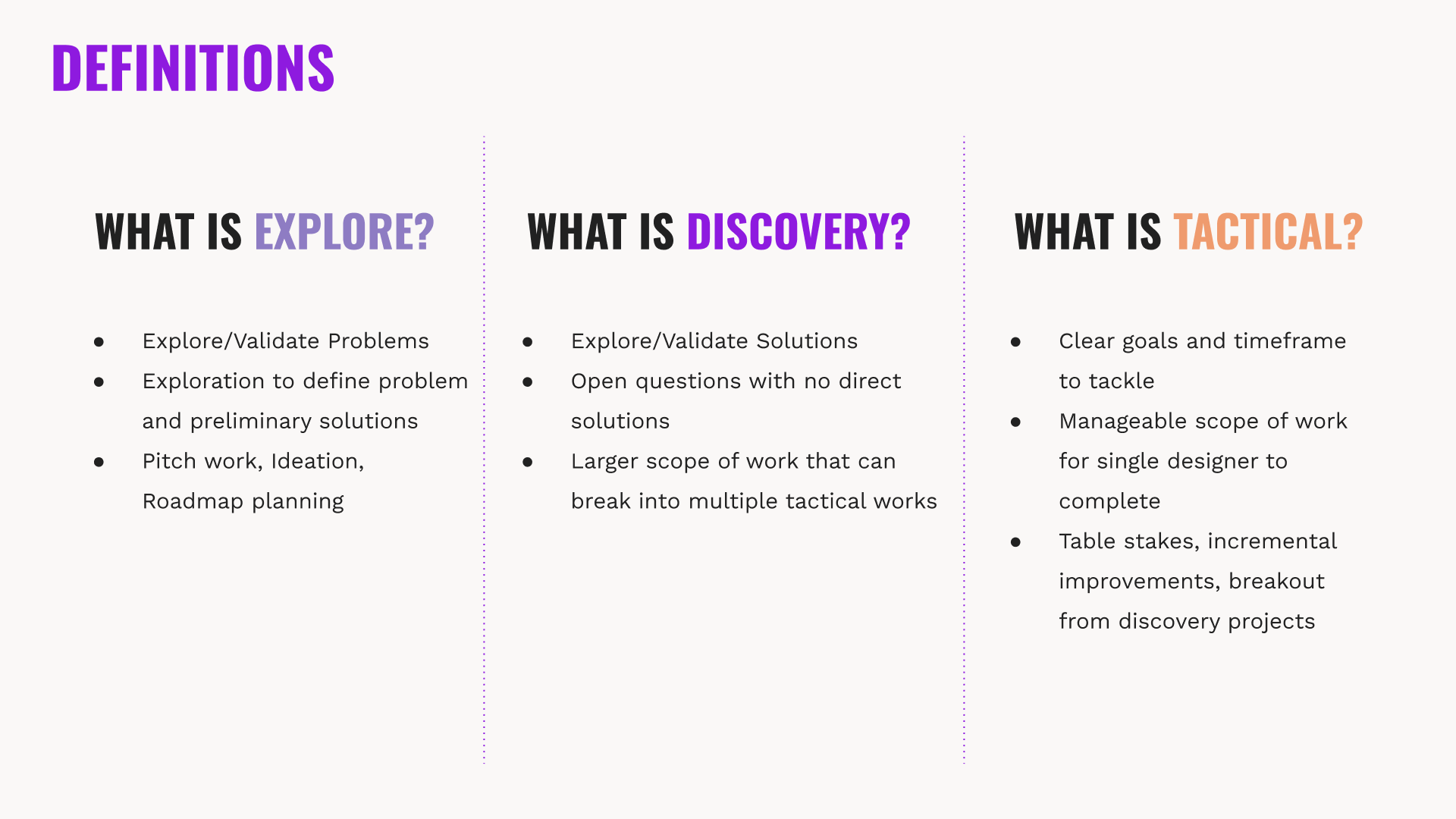
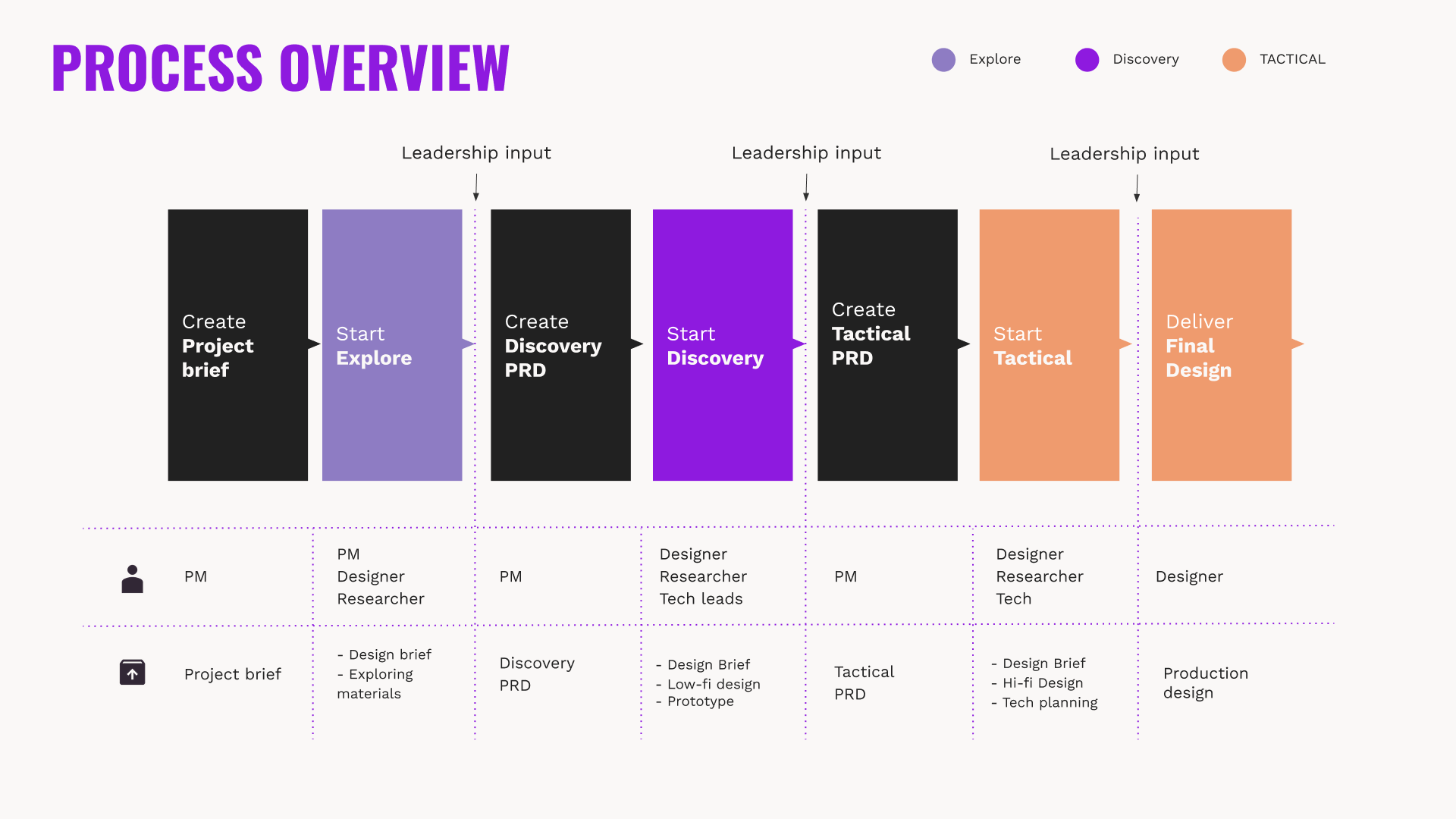
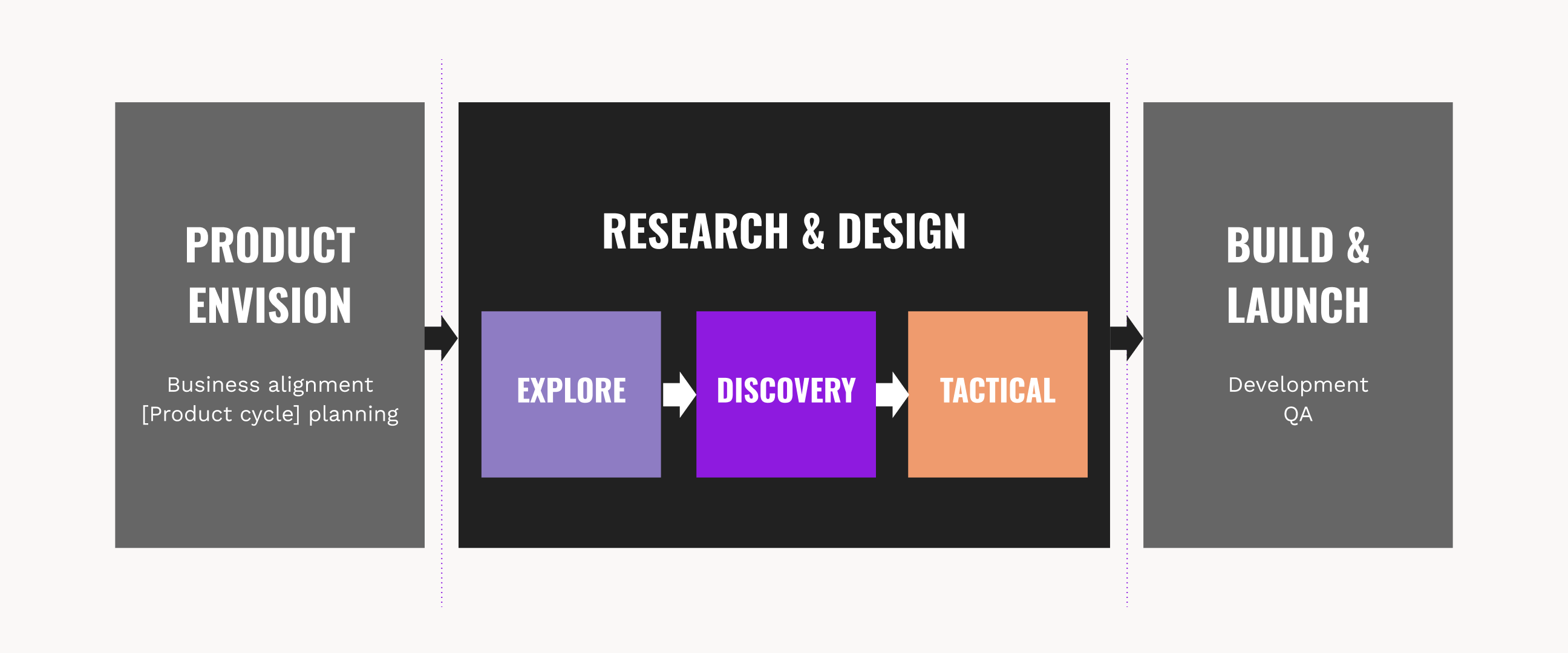
Streamlining the design process starts with structuring work into three clear phases—explore, discovery, and tactical—so teams can move from broad ideation to focused execution without ambiguity. Establishing solid documentation, particularly through a well-defined design brief, ensures alignment on goals, constraints, and success criteria from the outset.
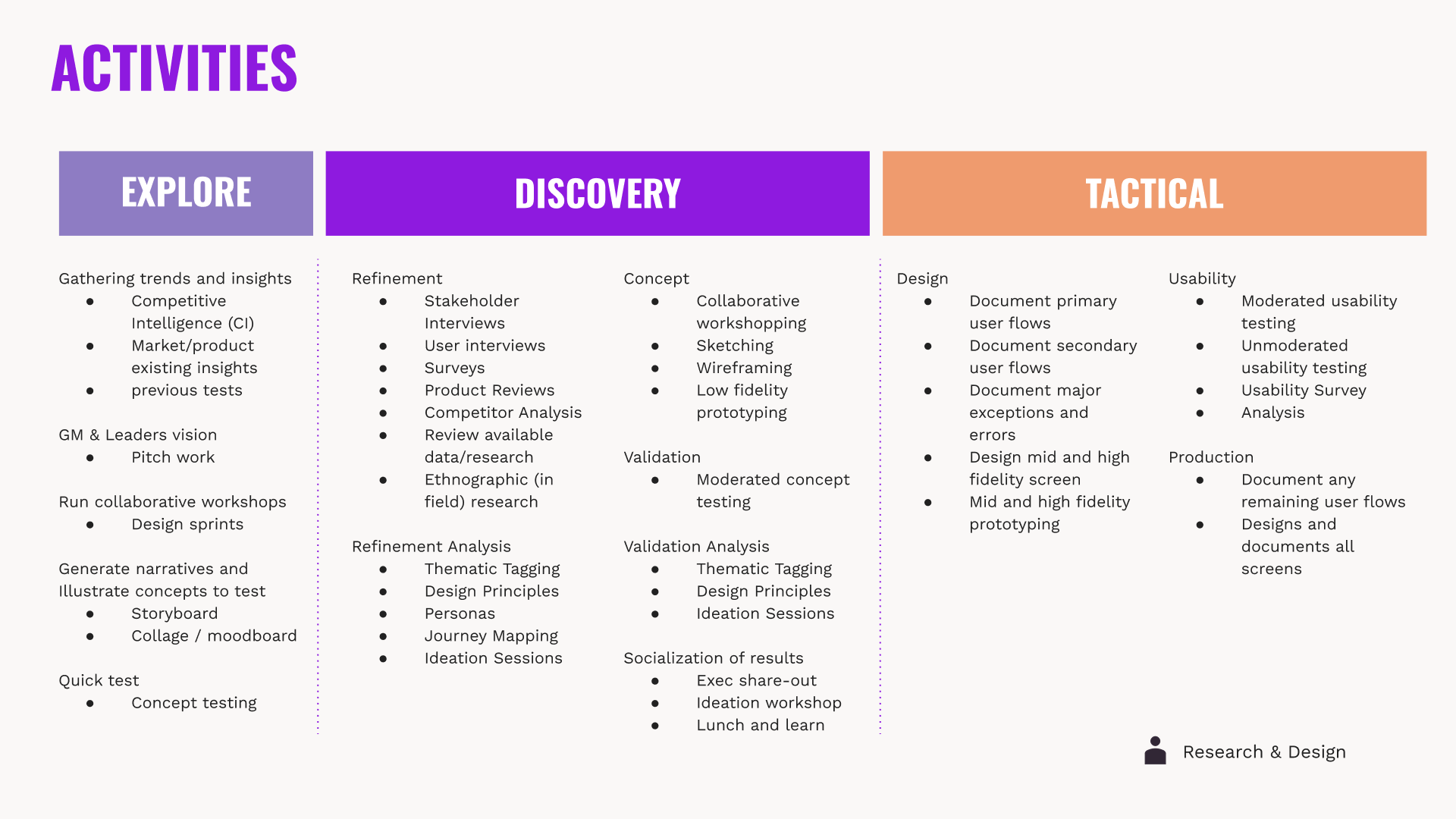
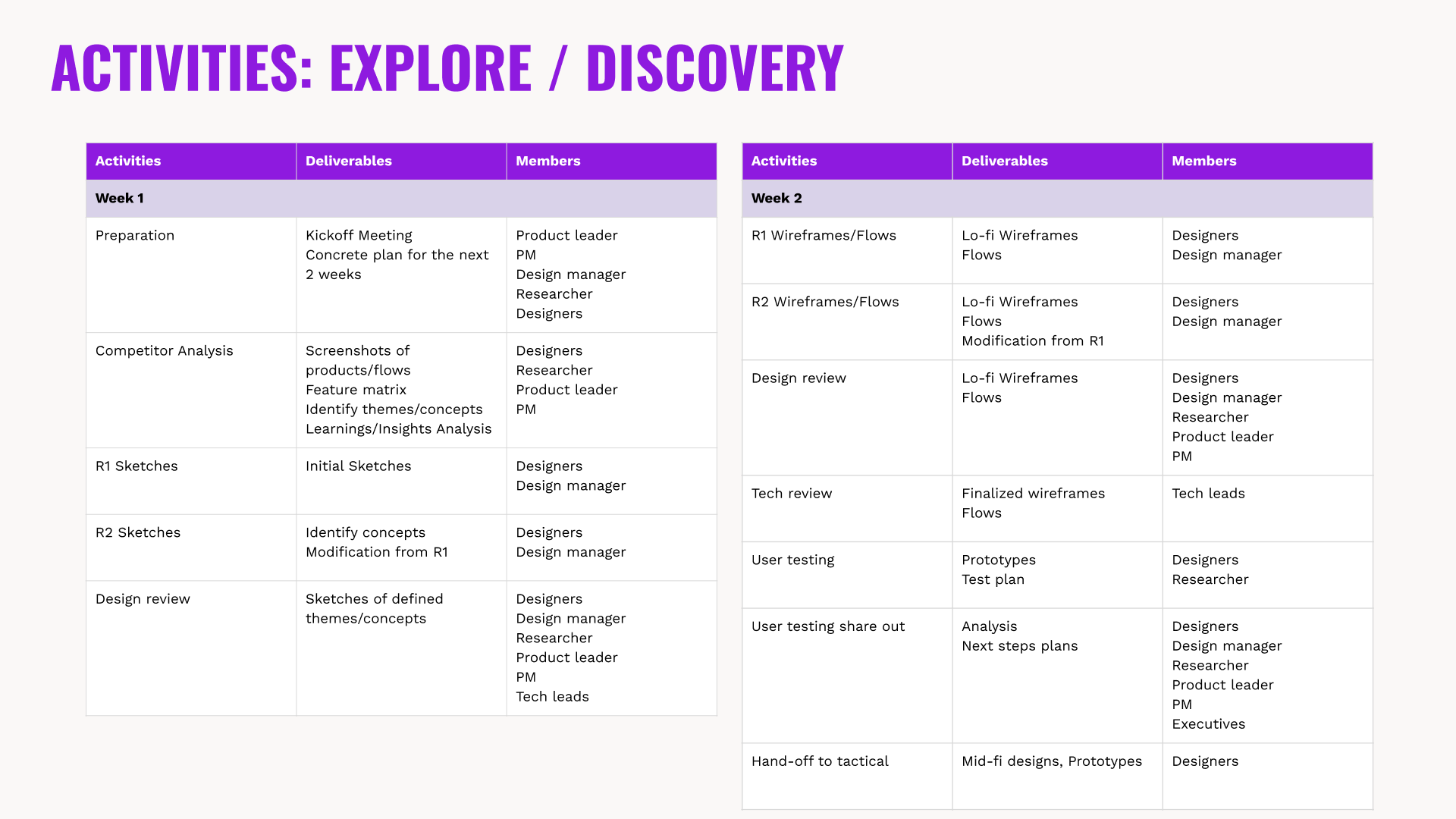
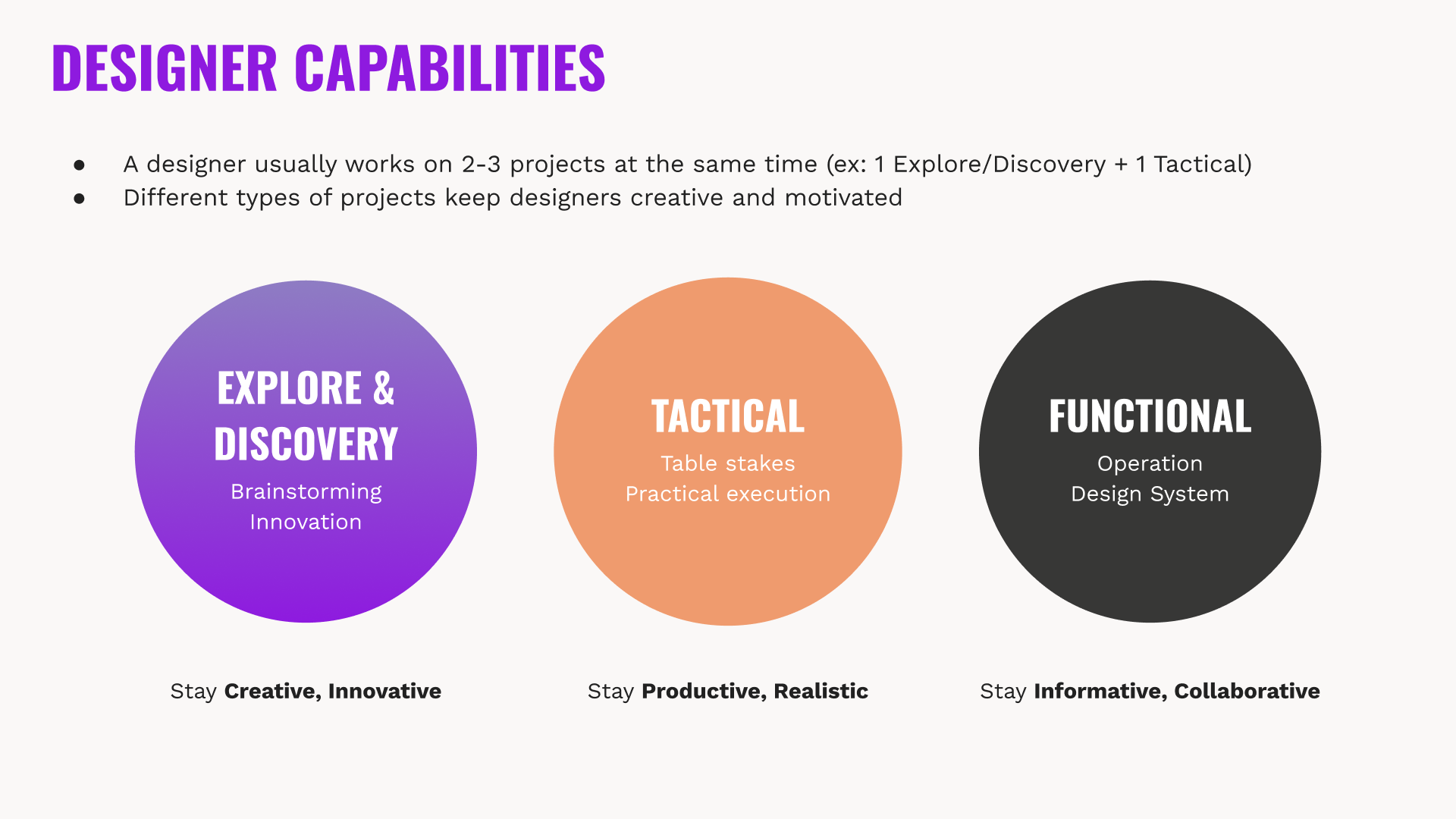
It's equally important to define designer capabilities, clarifying who brings which strengths to each phase to maximize efficiency and quality. Supporting this, a curated library of design activities provides repeatable methods teams can draw from, reducing guesswork and inconsistency.
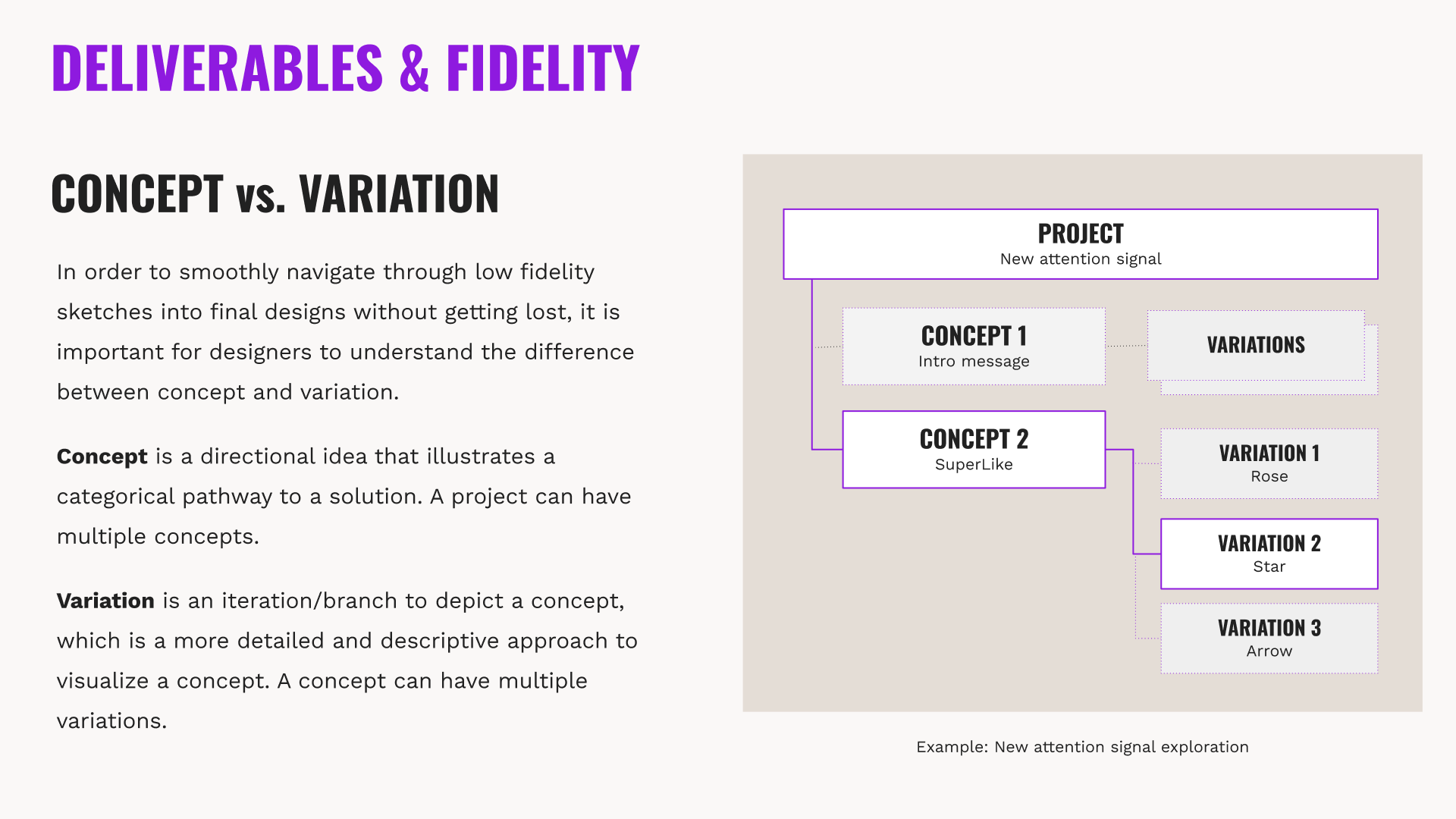
Finally, maintaining clarity around fidelity and expected deliverables at each stage helps set the right level of detail, prevents over- or under-designing, and keeps stakeholders aligned throughout the process.
Context
Many design teams across Match Group brands operate with inconsistent process language and workflows, creating inefficiencies and confusion when collaborating across groups. This lack of standardization makes it harder for designers to communicate clearly with stakeholders, often leading to misaligned expectations around scope, timelines, and outcomes.
Designers also frequently feel unequipped at the start of projects, lacking the tools or guidance needed to confidently estimate effort and select appropriate design activities. This gap extends into facilitation, where many are not prepared to independently run effective design workshops.
Compounding these challenges, the absence of centralized documentation prevents teams from establishing a shared understanding, leaving individuals to navigate processes in isolation rather than working from a cohesive, aligned foundation.
Goal
- Align executive and stakeholder expectations with design team processes, outputs, and impact
- Establish a consistent and scalable design process language across the Match organization to improve cross-team collaboration and efficiency
- Empower designers to navigate and resolve collaboration challenges with greater clarity and confidence
- Enable designers with the skills, frameworks, and resources needed to independently lead multiple and complex projects
Impact
Slides Snapshots